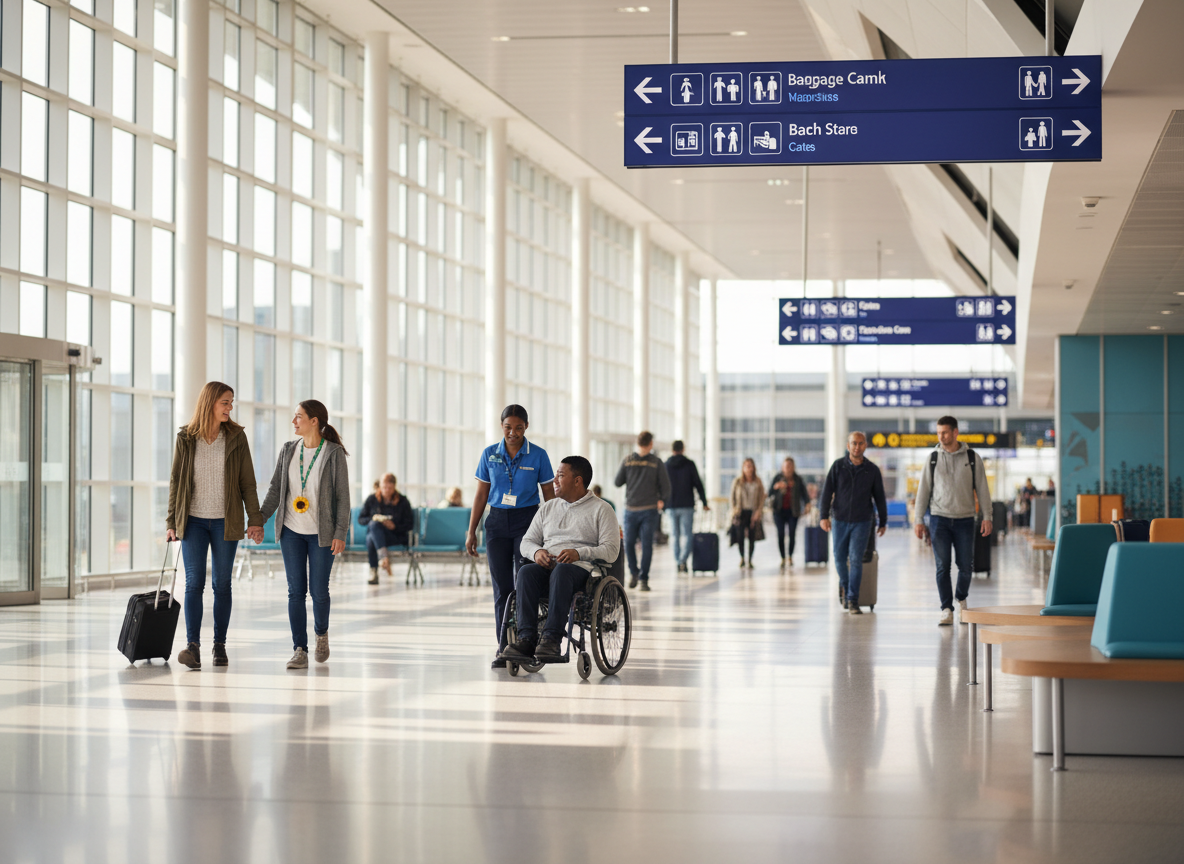
Navigate UK Airports with Confidence: Accessibility & Facilities Guide
Planning air travel as a disabled, neurodivergent, or SEN passenger? Choosing the right UK airport can make your journey smoother. This guide helps you compare accessibility, facilities, and support across 28 major UK airports—so you can travel with confidence, not stress.
Whether you use a wheelchair, have a hidden disability, are autistic or ADHD, or travel with someone who needs extra support, we've gathered everything you need to know in one place.
From special assistance booking to sensory rooms, accessible toilets to Sunflower Lanyard schemes—find out which airport works best for you.
Why Airport Choice Matters for Disabled Passengers
Not all UK airports offer the same level of accessibility or facilities. Some have dedicated quiet rooms for neurodivergent passengers. Others offer changing places toilets or accessible parking closer to terminals. Some airports have trained staff for hidden disabilities; others don't.
By researching your airport before travel, you can:
- Request the right support in advance
- Avoid surprises on the day
- Choose an airport that meets your specific needs
- Travel with less anxiety and more independence
This site brings together accessibility information from 28 UK airports so you can compare and plan with confidence.
What you'll find here
We cover four key areas to help you plan:
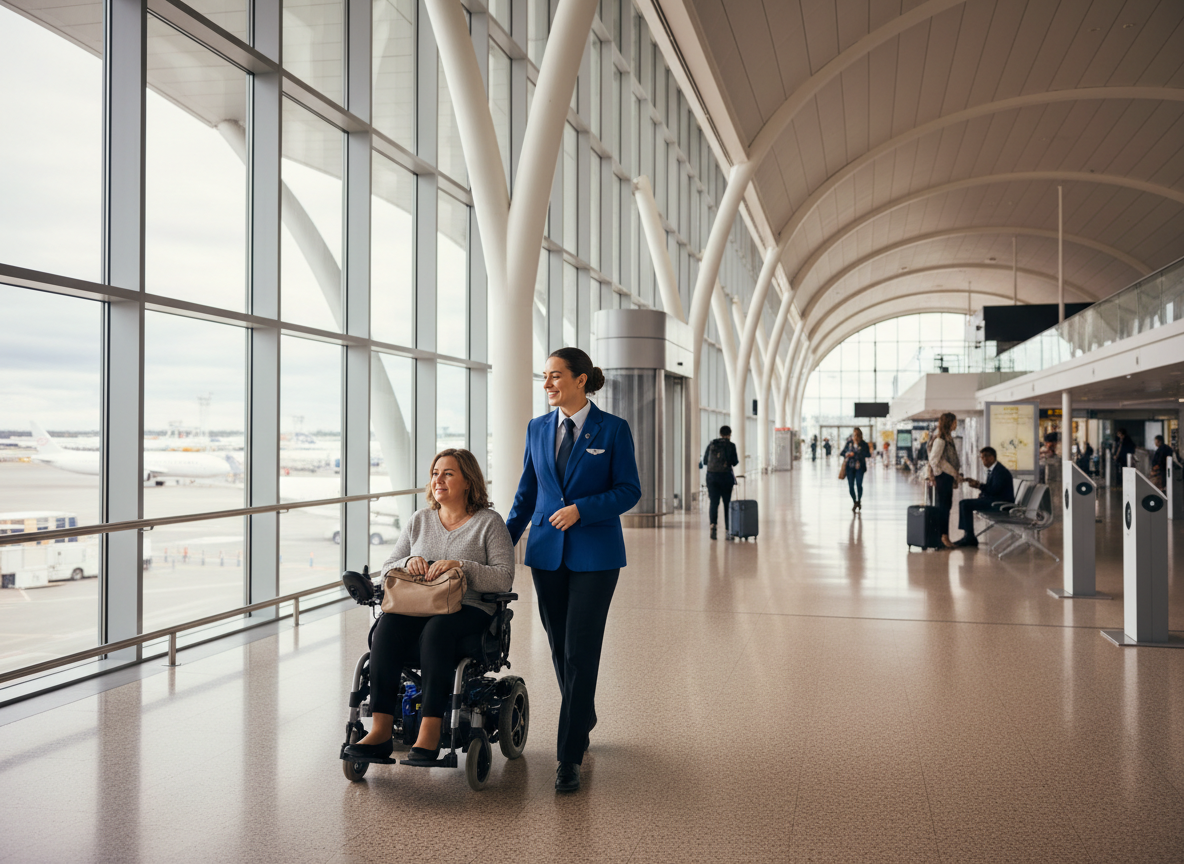
Assistance Services
How to book help, what support is available (wheelchair assistance, accessible transport, mobility aids), and contact details for each airport. Most UK airports require 48 hours' notice — we tell you how to arrange this.
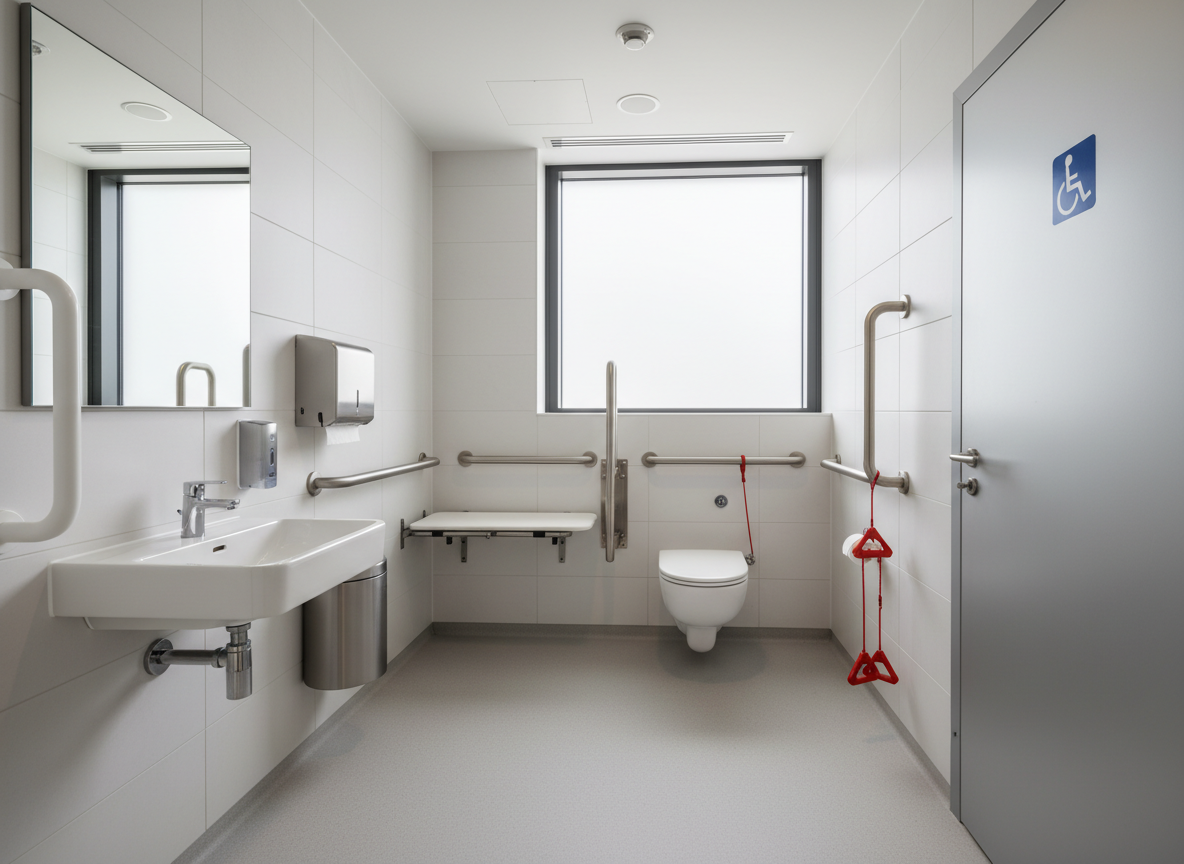
Facilities
Changing places toilets, accessible standard toilets, family rooms, quiet rooms, sensory rooms, accessible parking, drop-off zones, and step-free access. Facilities vary by airport — we detail what's available where.
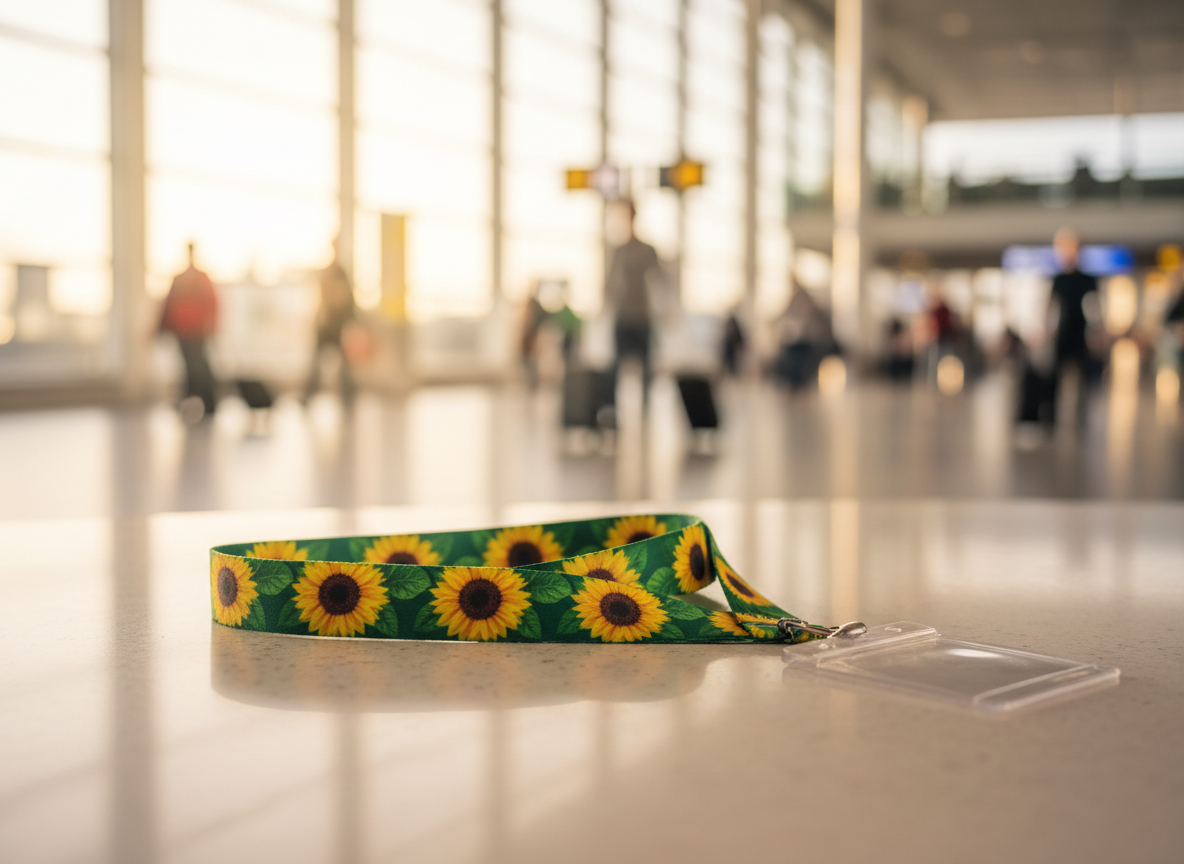
Sunflower Lanyard
Information about the Sunflower Lanyard scheme at each airport, what it means, and how to use it. Plus guidance for neurodivergent and ND passengers navigating busy terminals.
Getting There
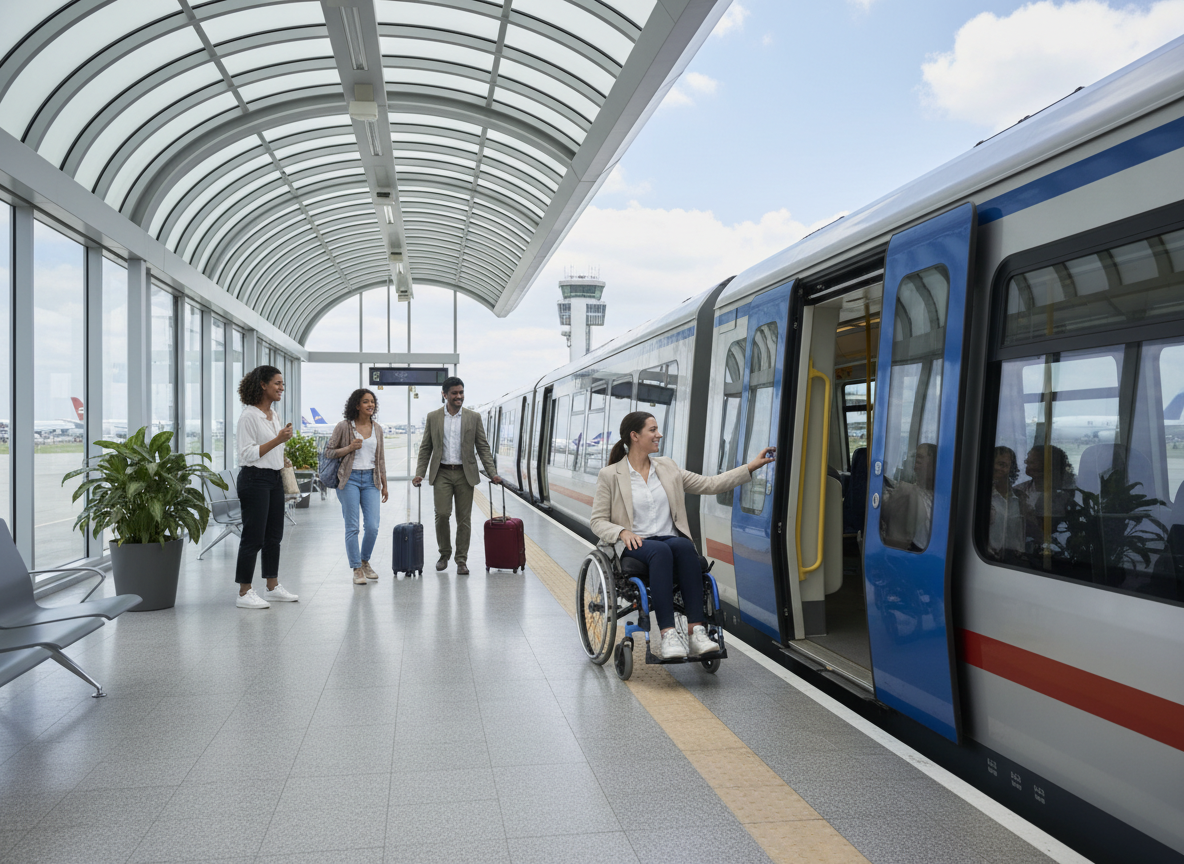
Accessible public transport links, accessible parking, drop-off information, and step-free routes from transport hubs to terminals. Planning your arrival is as important as the flight itself.
Top 10 UK airports
Quick access to the busiest airports. We cover 28 airports in total across the UK.
Comparing UK Airports: Which Is Right for You?
All 28 UK airports we cover must provide assistance under UK law (Equality Act 2010). But accessibility quality, facility availability, and staff training vary.
For wheelchair users:
Check which airports have accessible transport, dedicated assistance teams, and accessible toilets in all terminals.
For neurodivergent/ND passengers:
Look for airports with quiet rooms, sensory-friendly facilities, and staff trained in autism/ADHD awareness.
For hidden disabilities:
Airports with Sunflower Lanyard schemes and staff awareness are essential.
For SEN passengers:
Facilities like accessible toilets, accessible parking, and trained assistance staff make a difference.
Browse our Top 10 airports below, or view all 28 to find your best match.
Planning your journey?
Contact your airline 48 hours in advance. This is the golden rule. It gives them time to arrange:
- Wheelchair assistance or mobility support
- Accessible seating
- Assistance with medication or medical equipment
- Any other support you need
Under UK law, airports and airlines must provide assistance free of charge (Equality Act 2010, EU Regulation 1107/2006).
Use this site to:
- Research your airport's facilities and services
- Note down what you need
- Contact your airline with specific requests
- Know your rights if something goes wrong
We've included contact details and booking links for each airport to make this easier.
Why this site exists
Finding clear, consistent accessibility information across different airport websites is frustrating. Some airports bury it in PDFs. Others don't mention hidden disabilities at all. We've done the research for you.
This site brings together accessibility and facilities information from 28 major UK airports in one place—so you can compare, plan, and travel with confidence.
Who this is for:
- Wheelchair users and mobility aid users
- Deaf and hard of hearing passengers
- Blind and partially sighted passengers
- Neurodivergent passengers (autistic, ADHD, etc.)
- Passengers with hidden disabilities
- SEN passengers and those needing support
- Anyone planning accessible air travel in the UK
Our commitment:
All information is sourced from official airport websites and verified where possible. We update regularly. If you spot something that needs updating, please let us know.
Frequently Asked Questions
How far in advance should I contact my airline for special assistance?
At least 48 hours before your flight. This gives the airline and airport time to arrange the right support. Some airlines ask for longer notice for complex requests (e.g., travelling with a service animal or medical equipment). Check your airline's policy when booking.
What's the Hidden Disabilities Sunflower Lanyard and how do I use it at airports?
The Sunflower Lanyard is a discreet way to signal to staff that you have a hidden disability and may need support (e.g., autism, anxiety, chronic pain, invisible illness). Wear it at the airport and staff will offer assistance without you having to explain. Not all airports use the scheme yet, but we list which ones do. You can get a lanyard from the official Hidden Disabilities store or some airport information desks.
Are UK airports required to provide accessibility support?
Yes. Under the UK Equality Act 2010 and EU Regulation 1107/2006, airports and airlines must provide assistance to disabled passengers free of charge. This includes wheelchair assistance, accessible toilets, and other reasonable adjustments. If you're denied support, you have the right to complain.
What facilities should I look for when choosing an airport?
This depends on your needs. Wheelchair users should check for accessible transport, parking, and toilets. Neurodivergent passengers benefit from quiet rooms and sensory-friendly spaces. Everyone should look for accessible standard toilets, step-free access, and trained assistance staff. Our airport guides detail all facilities available at each location.
Can I bring mobility aids or medical equipment on a flight?
Yes, but inform your airline when booking. Wheelchairs, walking aids, oxygen equipment, and medications are usually permitted. Airlines have specific rules about what can go in the cabin vs. hold. Contact your airline directly to confirm what's allowed and how to arrange it.
What can I do if I'm denied support or assistance at an airport?
You have the right to complain. Start with the airport or airline's formal complaints process. If unresolved, escalate to the Civil Aviation Authority (CAA) or the Equality Advisory Support Service (EASS). Under UK law, denying reasonable adjustments to disabled passengers is unlawful.
Do all UK airports have quiet rooms or sensory spaces?
No. Availability varies. Larger airports like Heathrow, Gatwick, and Manchester tend to have dedicated quiet or sensory rooms. Smaller airports may not. We list what's available at each airport so you can plan ahead.
How do I find the best airport for my specific needs?
Use this site to compare airports by the facilities and services that matter to you. Each airport guide covers assistance services, accessible facilities, Sunflower Lanyard availability, and transport options. Start with our Top 10 or browse all 28 airports to find the best match.