Your Departures Journey
From booking assistance to boarding your flight — everything you need to know about departing from a UK airport, in one clear guide.
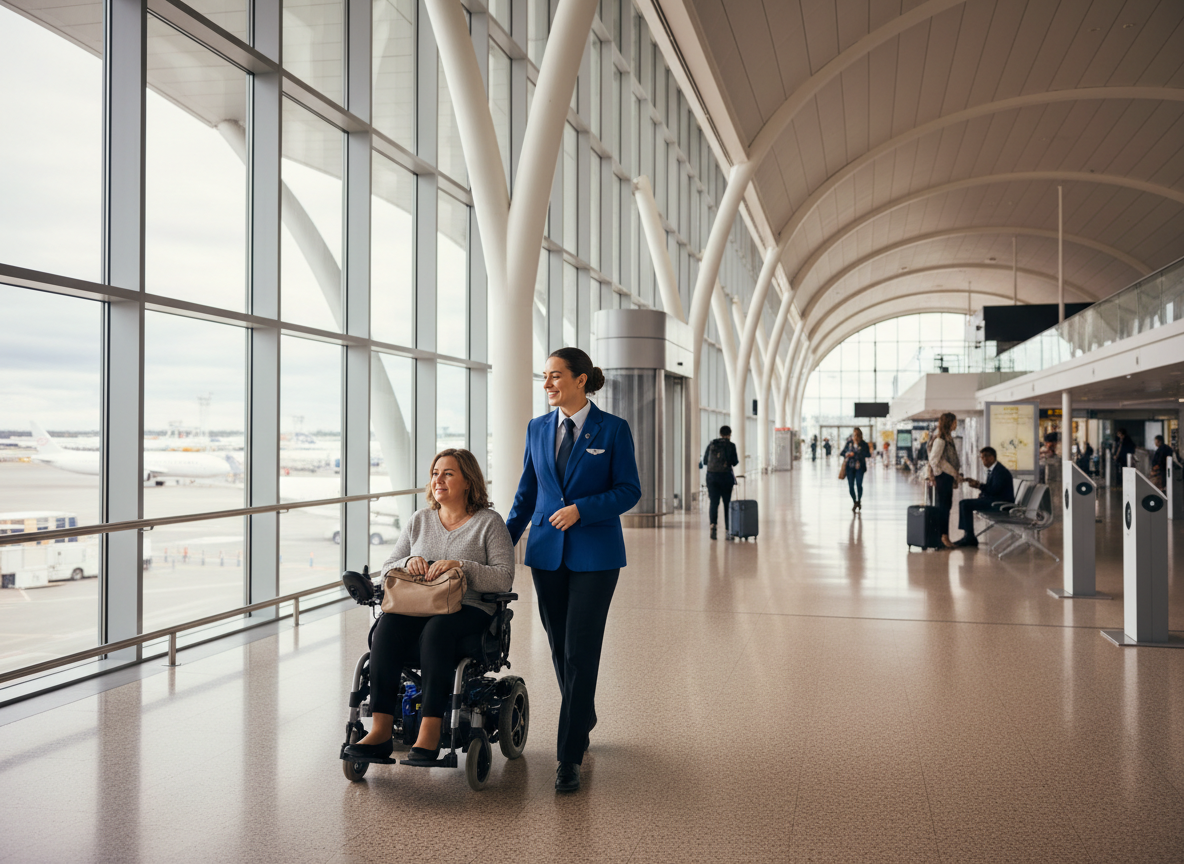
Book your assistance
Contact your airline, tour operator, or travel agent to request assistance. Describe your needs clearly — mobility support, sensory needs, communication preferences, or anything else.
Tips
- Book as early as possible — ideally when you book your flight
- Mention specific equipment (wheelchair, mobility scooter, CPAP)
- Ask about priority boarding if queuing is difficult
- Request a Sunflower lanyard in advance if you'd like one ready
Prepare for the day
Check your airport's page on this site for specific details about help points, quiet spaces, and step-free routes. Pack any documentation you might need.
Tips
- Download or print your airport's accessibility map
- Check security rules for medication and medical equipment
- Plan your transport — confirm Blue Badge parking or accessible transfers
- Consider visiting the airport website's virtual tour if available

Arrive & check in
Head to the Help Point or Assistance Reception when you arrive. If you've pre-booked, staff will be expecting you. If not, they'll still help — it may just take a little longer.
Tips
- Help Points are usually in car parks and at terminal entrances
- Collect a Sunflower lanyard from the information desk if you'd like one
- Let staff know if you need a quiet space while waiting
- Your own wheelchair can be used right up to the aircraft door
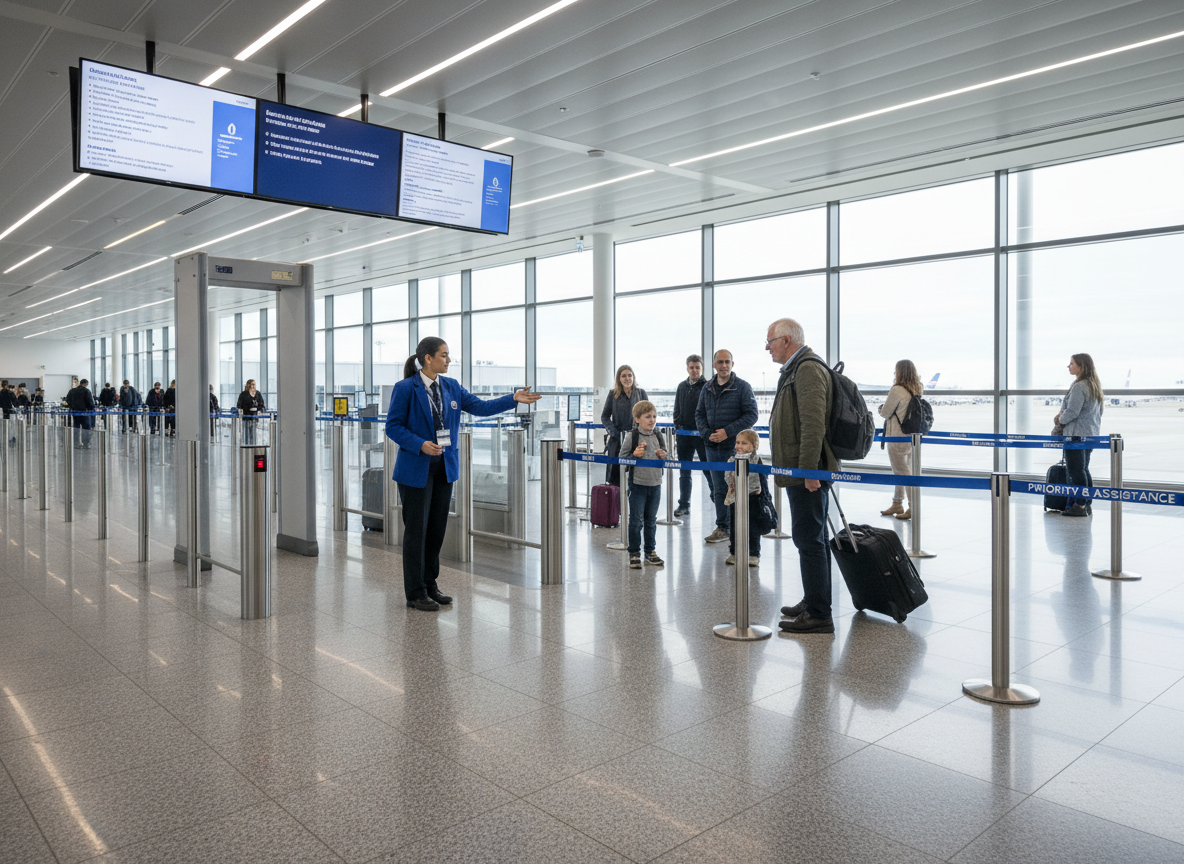
Security screening
Assistance staff will support you through security. You can request a private screening room, ask for a same-gender officer, or let staff know about any medical devices or sensory sensitivities.
Tips
- Medication over 100ml is usually permitted with a prescription label
- Medical equipment (CPAP, oxygen) — notify your airline in advance
- You can keep shoes on if removing them is difficult — just ask
- Priority lanes may be available — ask assistance staff

Departure lounge
Once through security, you'll be in the departure lounge. Many airports have quiet rooms, sensory spaces, or low-stimulation areas. Assistance staff can guide you to these.
Tips
- Ask about quiet spaces or sensory rooms if you need calm
- Changing Places facilities are available at most major airports
- Assistance dogs have relief areas — ask staff for directions
- Staff will come to collect you for boarding when it's time
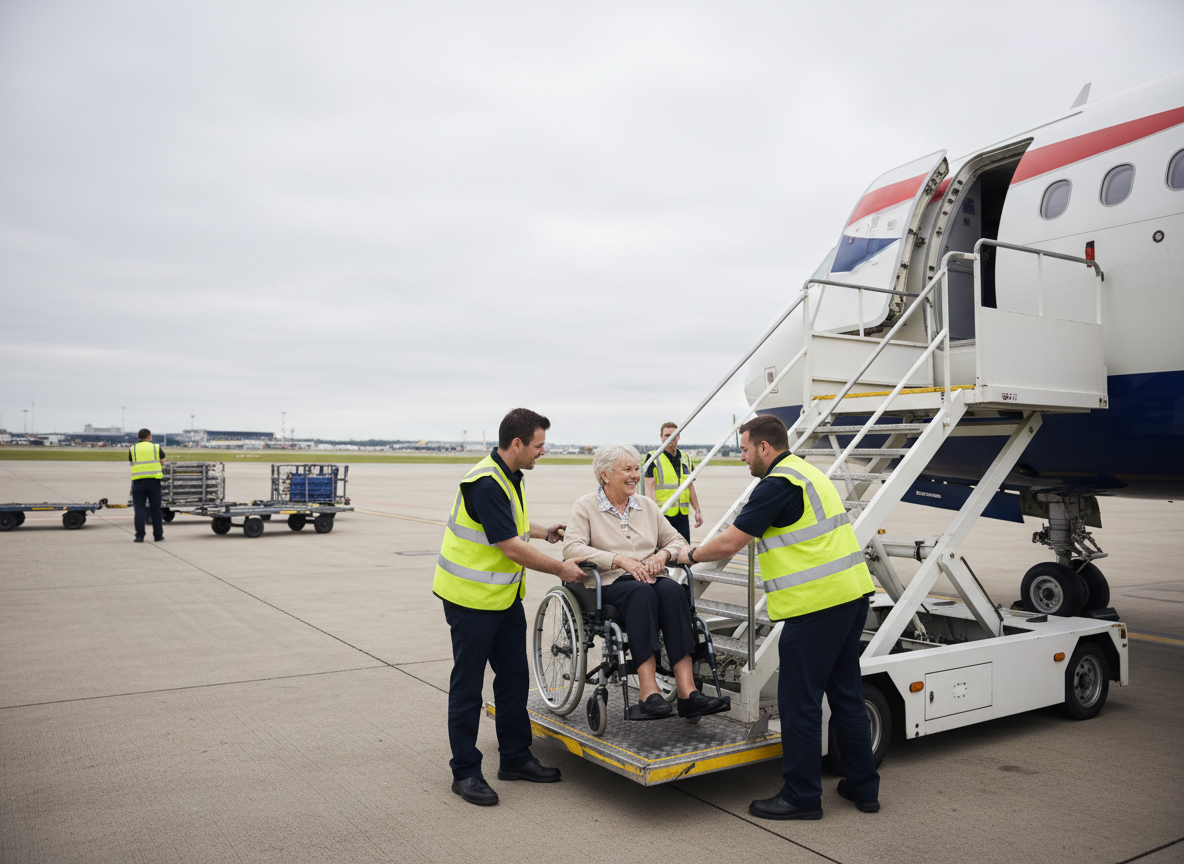
Boarding
You'll typically board first (priority boarding). Assistance staff will help you to the aircraft door. If you can't use steps, an ambulift or aviramp may be used for level boarding.
Tips
- Your wheelchair will be gate-checked and returned on arrival
- Cabin crew will be briefed about your needs
- Ask for an aisle chair if you need help reaching your seat
- Confirm your return assistance is booked for your destination
Airport-specific guides
Each airport has its own accessibility page with detailed information about help points, quiet spaces, step-free routes, and more.
View all 28 airportsYour rights as a passenger
Under UK law, airports and airlines must provide assistance to disabled passengers free of charge. You cannot be refused boarding because of your disability.
Read the full Know Your Rights guide